Talley Your Adventure – The Blog

Adventure Awaits!

At Talley Your Adventure, we don’t just plan luxury and culturally rich travel experiences—we live and breathe them. Our blog, travelingtalleys.blog, is where we share the real stories behind our adventures: kayaking alongside glaciers in Alaska, exploring temples in Japan, chasing waterfalls in Iceland, and wandering through storybook towns in Germany. If it’s unforgettable, chances are we’ve done it—or we’re planning it next. Impact-Site-Verification: 8a69d429-4a55-4b53-b8f6-72c437661af5

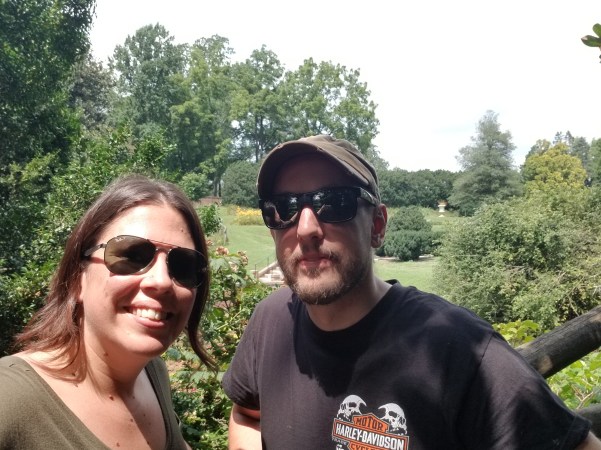
Nicolette brings deep experience in travel and heritage. With a Master’s in Public History, she’s worked as a Supervisory Park Ranger, Revenue Manager, and Program Analyst across multiple national parks for over a decade. Her career has taken her from managing interpretive boat tours in Alaska’s wild backcountry to overseeing large-scale visitor service projects with million-dollar budgets. And yes—she’s also a licensed 100-Ton Inland Master Boat Captain who’s led cultural and ecological tours from riverboats to remote beaches.

Clinton’s travel roots run just as deep. He’s worked in logistics and operations for the National Park Service and was a key member of the hospitality team aboard National Geographic Lindblad Expeditions. From managing guest services on remote international voyages to coordinating facility software systems stateside, he knows what it takes to deliver seamless, high-end travel experiences—even in the most unpredictable places.

Together, we created Talley Your Adventure to bring our experience, passion, and attention to detail to your travel planning. Whether it’s a fully curated group trip or a personalized vacation built just for you, we combine expert-level service with insider know-how—so you can focus on the magic of the journey.

Want us to help you on your next adventure? Head over to www.talleyyouradventure.com!

Sakura Blooms – Inuyama, Japan

  • Back in April I was promoted at work, which required relocation to Page Arizona, where I would work at Glen Canyon National Recreation Area. That quickly meant that we had to put our house on the market, plan for packing and moving all our household goods, and plan when we would start the drive across the country with our two dogs. To simplify the whole thing, we drove our dogs down to my parents so that they could stay “in the country on vacation”. This was sad for us but also freed up our opportunities for exploration. One of our first stops, that had been high on the list when we first moved to Baltimore, was PHILADELPHIA!

    Valley ForgeClinton and I first drove to Valley Forge, where were learned about the men commanded under General George Washington. The Continental Army, ceasing major operations for six months during the winter of 1777-1778, chose Valley Forge since it was close enough to keep an eye on the British near Philadelphia, but still far enough away to prevent a surprise attack. Recommended by Benjamin Franklin, Prussian Fredrich Wilhelm de Steuben joined the Continental Army and trained them into a formidable force. With his knowledge of advanced training techniques, he drilled the soldiers until even loading and firing was second nature – which at the time was one of the hardest and longest drills to master. The winter was harsh, and everyone camped out at Valley Forge suffered from lack of food and clothes. Soldiers shared inadequate housing, and supplies continued to run low throughout the six months the soldiers lived there – some solders didn’t even have shoes. This test of endurance was not lost on General Washington, who praised his soldiers despite the terrible conditions.

    From Valley Forge we got a hotel in Philadelphia. We used Hotels Tonight, which was a really easy app to navigate and get a cool, swank hotel right in the heart of the city. You do pay a fee for parking, but it is valet and you can leave your vehicle past checkout the next day for additional exploration. We also asked to hold our bags in the morning before check in so we could explore the city without luggage! Call ahead to see if they offer this at the hotel you choose, but it seemed to be a common practice.Independence Hall

    Getting a hotel in the city is the best idea – it is a very walk-able city. You have either a beautiful city block, full of history, or a National Park, which includes guided tours and other programs to educate visitors on the historical significance of the city. Clinton and I arrived mid afternoon so we opted to walking around and eating at a local German restaurant, Brauhaus Schmitz. Very good, we recommend! We walked up to the National Park Service (NPS) counter to ask about Independence Hall tickets and learned that you had to queue up the morning of and could have up to ten tickets per person. We arrived around 8:30 a.m. and the line was already back close to the entrance door. We did get tickets, though, for a 11:45 tour. We sat in the park for awhile and people watched, and then headed into the general area. There is security but it was quick, and you can join the tour of the Senate and House and learned a great deal. Going into Independence Hall was a must, so we definitely recommend it. Sitting and standing in the areas where our Founding Fathers shaped the beginning of our nation is truly epic.

    Independence Hall is actually much smaller than I thought it would be, but that made it even better because you could feel how close you were to some of our amazing Founding Fathers. Forging a nation is no easy task, and listening to the rangers during the tour reflected many of the struggles and lessons INDY Assembly Roomlearned, or not learned, during this early time period. The tour starts on the outside of the Hall and brings you into the Assembly Room, where both the Declaration of Independence and the U.S. Constitution were signed. Following President Abraham Lincoln’s assassination, his body laid in rest here for two days. After the capital was moved to Washington D.C. 1799. In 1818, the building was sold to the City of Philadelphia. The building was build originally as the Pennsylvania State House in 1732, many years before the Revolution! Who knew how historic this building was going to be in the early 1700s!

    DON’T FORGET TO VISIT THE LIBERTY BELL! There is usually a long line, so we went right from getting our tickets at the visitor center to walking right across the street to see the Liberty Bell. Respect your history, please, and DO NOT TOUCH!Liberty Bell

    Independence National Historical Park is much more than just the Liberty Bell and Independence Hall – it includes the entire area of Philadelphia. Many, if not most, of the buildings are tied to early colonial history in some fashion and it is worth scheduling part of your visit to include walking around the area. Don’t miss out on the wonderful history that is available to you by just sitting and reflecting. What would our Founding Fathers think today?

    After learning a ton and soaking up some authentic American History, we headed home. While we missed our pups, it is nice to be able to do this type of stuff before we headed out west!

  • 36856410_916007531920864_5988899846331826176_nWhile my parents were visiting  during the July 4th holiday we were able to do something that had been on our list of things to do for the past two years: visit the National Aquarium! We started the day early as one of the first visitors when the building opened which is a definite recommendation if you plan to visit, especially on a Saturday. We did the same thing with the Historic Ships mentioned in previous posts – plan accordingly!

    The National Aquarium is the largest tourist attraction in the state of Maryland with over 1.5 million visitors annually. The Aquarium was originally supported by the residents of the City of Baltimore when they voted for a bond loan referendum for building the facility in 1976. Supported by Mayor William Schaefer and Commissioner of the city Department of Housing and Community Development Robert Embry, groundbreaking began in August, 1978. The United States Congress designated the facility a national aquarium in 1979.

    One of the coolest exhibits is the tropical rain forest at the top deck. We were able to see sloths napping in the canopy, and various birds – including the loudest bird in the world! There is one large, 265,000 gallon habitat called Blacktip Reef in the middle of the 36913075_916007885254162_4261895704223416320_nbuilding that can be viewed as you access the various exhibits and levels. There are around 70 species that co-habitat, including a 500 pound green sea turtle named Calypso! She was rescued off the shore of Long Island in 2000 and had her left front flipper amputated to save her life as it had become infected. Another awesome exhibit is Shark Alley, which includes nurse sharks and sandbar sharks in a 225,000 gallon ring shaped exhibit. It is really neat as it gets darker and darker when you walk down the ramp, and the music is on point!

    The staff and volunteers obviously love working there as we waved at multiple divers who were feeding the fish and interacting with visitors. I learned a ton with each questions I asked, and really enjoyed seeing Blacktip Reef from various angles as we went higher up in the building. There is a lot of informational exhibits but even more opportunities for up close observation. Attempting to find the various reptiles hidden in the landscape is so much fun, and watching memorizing fish and animals co-exist is definitely worth the time.

    Hopefully you find time in your visit to Baltimore to view the National Aquarium for a few hours. It’s in the heart of the Inner Harbor so there is so much to do there already, but this is a must see. Until next time!


    This slideshow requires JavaScript.


  • After working at the Arkansas Inland Maritime Museum when I was living in Little Rock and giving tours of RazorbackI’ve found the history and life at sea story of submarines and submariners fascinating. I’ve lived on a boat for months at a time and our conditions were no where near what these sailors had to endure. I understand that fundamentally the vessels we separately worked on are different, but in general terms of living on the water it is an interesting dynamic for someone whose lived and worked in close quarters with the same people for long periods of time. More so when you share a bed with two or three other sailors on a rotating shift, or having specific steps to “flush” the toilet like on a submarine!

    Torsk (SS 423) is a tench-class submarine and part of the historic fleet located in the 20180706_113434Inner Harbor of Baltimore. If you remember my post about Razorback, you’ll remember that sub was a balao-class sub. Torsk was an improvement to the former design with better interior machinery and ballast tank arrangement. She was commissioned on December 16, 1944, built out of the Portsmouth Naval Shipyard and one of only ten tench-class submarines to see service during World War II.

    I can imagine that life aboard Torsk was just as grueling as life on board Razorback. Tight quarters, long shifts, boring patrols…but for every boring patrol is an intense day aboard a submarine. Mainly operating off Japan during the spring and summer of 1945, she made two war patrols, carried out plane guard duties and sunk three Japanese ships before the end of the war. After World War II, Torsk served as a Navy Submarine School training boat. Like many other submarines, in the 1950s she underwent a fleet snorkel conversion. This conversion allowed the vessel to run on diesel power while submerged, instead of on the batteries only; it also allowed her to charge her batteries while submerged. Before this the engines only ran when the boat was on the surface! 20180706_112451Outwardly her “sail” contained the snorkel intake and exhaust masts. One interesting upgrade was the Regulus Missile system. This system allowed for a conventional or nuclear warhead to be launched from the deck of a submarine (a properly outfitted submarine) and be radio controlled towards a specific target. This modern improvement to warfare could also be controlled through guidance boats positioned along the flight path. Assigned to guidance duty, Torsk began modification and equipment upgrades at the Philadelphia Naval Shipyard in late 1955 and participated in various training exercises for years, before the system was discontinued in the 1960s. Continuing to provide training services, she joined the Submarine Squadron Six in Norfolk, Virginia and was decommissioned on March 4, 1968. While in service, Torsk had an impressive record of over 10,600 career dives! Today she rests at her final berth in the Inner Harbor of Baltimore, where you can visit yourself and see the boat with a self-guided tour!

    I highly recommend you take time and visit this submarine – just watch your head! Until next time!

    This slideshow requires JavaScript.