


 Driving out to Arizona was the real test to see if Clinton and I hadn’t become too much like “city folk”. We decided we would camp for as many of the days we could, and we would pack a cooler with lunches and stop ever two hours with the dogs. Of the six nights, we camped for five! We did pretty well with our lunches and the dogs, especially considering the space. A Honda Accord is not the biggest vehicle in the world! We decided to get a Thule hard top for the car so we could have our camping gear easily accessible. This really came in handy, especially towards the end when you are really tired of unloading and loading the car and just kinda throw everything in…
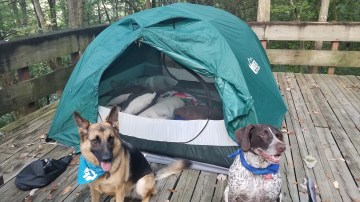
Our first stop along the way was in Tennessee, at Edgar Evins State Park. We had an ambitious drive that day because of the #HurricaneFlorence so we drove throughout the day to get through the Smokey Mountains. We camped on a wooden deck that was pretty cool but a little cramped considering how close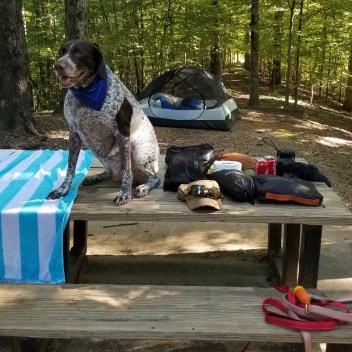 you were to the other camp sites. The nice thing was we were able to block off the main entrance to the deck so the dogs knew their boundary. The next day we headed to Village Creek State Park, near Wynne, Arkansas. Clinton and I have been here a few times already trekking across the country, and we always enjoy our experience. They have showers, beautiful trails, and well maintained campgrounds. We stayed in a different part of the park this time, which was another treat because NO ONE was there – we had the entire campground all to ourselves!
Clinton and I next camped in Oklahoma at Foss State Park. If you have never been to Oklahoma before, you probably have the stereotypical image of endless flat prairies, oil rigs, and a rather boring landscape. I assure you that not all of Oklahoma is like that! (And, for the record, that is pretty cool for some people!) Foss State Park is plentiful with recreational opportunities on both Foss Lake, and the surrounding landscape. We asked the ranger for a recommendation for a campsite with the dogs, and he sent us to a really cool part of the area that included 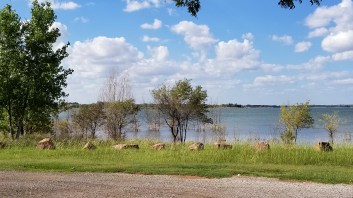 access for kayakers, and trees for us to set up our tent and block the sun (we got there pretty early in the afternoon). We arrived with enough time to do a nice walk and let the dogs swim, before settling in for the night. The next day we woke up and headed into New Mexico, along the Sangre de Cristo Mountains, to camp at Coyote Creek State Park. The campsite was surrounded by a forest full of evergreen trees and beautiful views of the southernmost sub-range of the Rocky Mountains. One cool part was the campsite itself – it had a small shelter that included a picnic table. Because we had an incoming storm it was nice to set up the tent but still have a dry area we could walk around in and cook dinner and hand out before really heading to bed.
Camping can be difficult with dogs but it is also one of the best, most exciting parts of camping as well.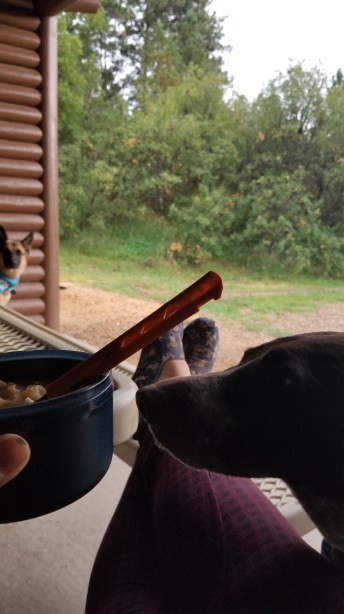 Having a companion there who is nothing but loyal and wants to be around you to play is a confidence booster, and being a team while out in the wilderness is key. We constantly reinforce rules with the dogs, including boundaries and how far we feel is “too far” from us if they are off leash. We always follow the rules, and if a leash is necessary we at least carry it with us – and always on if other people are around. Be respectful – not everyone likes dogs and that is okay! Always remember to keep your furry friends in mind when packing snacks and water – they need nutrients as well. Before we started our adventure we did go out and upgrade our camping equipment – in particular, our sleeping pads and the tent. When we went out camping in Maryland (future blog post!) it rained for a part of the trip, and our tent leaked. We were uncomfortable throughout the night because everything felt soggy, and to be honest we couldn’t remember the last time we had actually bought any new camping equipment. When we went to the store we were very excited to try the latest stuff, but we also planned smart because we knew that we were going to have limitations for gear because of the size of the car.
After it rained all night while camping in New Mexico we opted to be lazy and get a hotel room the last night of our adventure. We made it to Page the day after, and checked into our housing. It was definitely an exciting trip that included great and memorable experiences. We made sure to stop if one of us wanted a picture opportunity. We stopped frequently for the dogs, and tried to find places that included open fields for them to run around. Campgrounds are good for this, because usually people aren’t in them mid day and you are just stopping by quickly to stretch your legs. Pack it in and pack it out! Hopefully this encourages you to try and include camping in your next adventure!
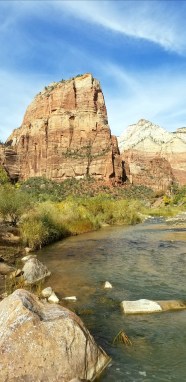 far, so we ended up just taking the scenic bus ride into the park and doing the scenic hikes to various viewpoints. I remember sitting on a rock and watching the water flow by for hours – it was magical.
 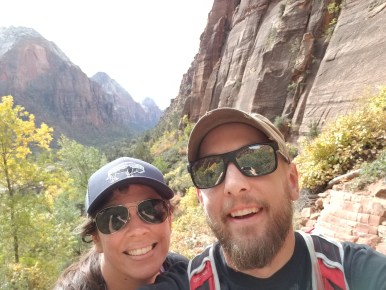 stop to catch your breath though was another amazing scene of
 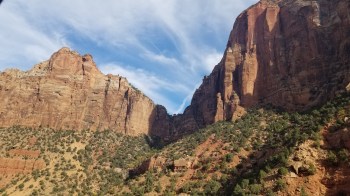 Park, and since we were there during the fall it was especially beautiful.
 Talley Your Adventure - The Blog