


Welcome back to #NationalParkWeek posts! Our last post to celebrate this week will focus on the Keukenhof Gardens, located in the Netherlands. I was very disappointed when I found out that the peak bloom season for the cherry blossom trees in D.C. started when I was going to be in Europe, so to make up for it we decided to go to Keukenhof 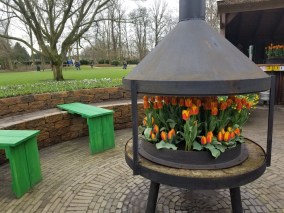 instead! I found the gardens while we were watching Rick Steves. 🙂 It definitely more than made up for the blossoms!
Keukenhof is one of the world’s largest flower gardens, located in Lisse, South Holland. We were lucky because we have friends who live pretty close to the location who also were nice enough to pick us up in Amsterdam and drive us to the gardens for the day.
Keukenhof has some interesting history that dates back to the 15th century, with Countess Jacoba van Beieren would gather the fruits and vegetables from the area for the kitchen of Teylingen Castle. The Keukenhof Castle was built in 1641. The castle gardens were redesigned in 1857 by Jan David Zocher and his son, Louis Paul Zocher, in the English landscape style. In 1949 a plan was created to use the estate to exhibit spring-flowering bulbs. The park officially opened its gates to the public in 1950 and hosts a theme every year in honor of the various gardens. This year the theme is “Romance in Flowers”, and with the many beautiful colors arranged gorgeously around a grand landscape it definitely fits!
Windmills and clogs seem to be essential distinguishing aspects of Dutch culture (to us at 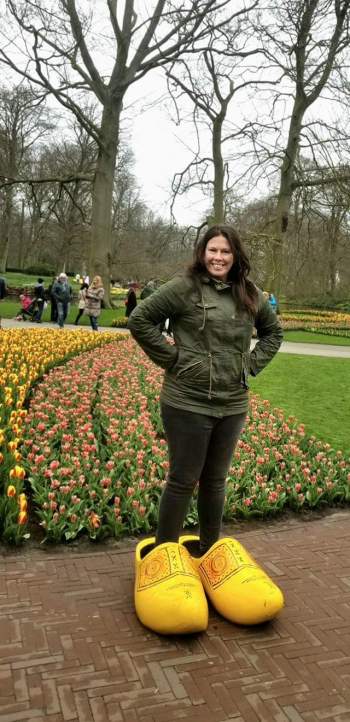 least!) and they did not disappoint! There were opportunities to pose with the large clogs and the beautiful windmill surrounded by the gorgeous, bright flowers were a great backdrop. Another important Dutch icon is the tulip, which was the main reason we were visiting the gardens. The gardens were not all at their full bloom but that didn’t matter! These gorgeous flowers came to western Europe around the sixteenth century. Seventeenth century Netherlands produced the Dutch Golden Age and Tulip mania, which include creating variegated patters in the tulip flowers. From this point on, the Netherlands became the major producer of tulips at world markets.
By the way, the Dutch Golden Age will probably be mentioned throughout the next few articles when I describe our Europe trip in more details, but to tide you over for the moment remember that this was a 150 year span starting with the Thirty Years’ War and ended with the Netherlands becoming, at the time, the foremost maritime and economic power in the world.
Enjoy the slideshow of pictures – there were too many to include in only one post! Until next time, I hope you enjoyed National Park Week and were able to #FindYourPark wherever you are!
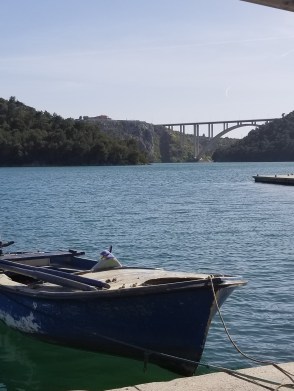 After leaving Zadar we headed to Šibenik to stay one more night in Croatia before flying back to the Netherlands. Šibenik is just about an hour south of Zadar, and hosts one of the most beautiful National Parks I have seen!
 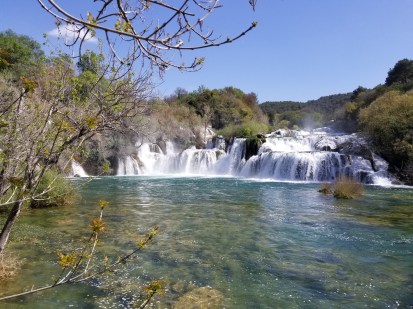 surrounding the area, and it was out first stop on the walk. There is a large bridge that walks you around one side of the pool so you can take in the view and see the waterfalls. It is the largest travertine cascade system in Europe. There is actually a total of 17 waterfalls. Can you spot them all?
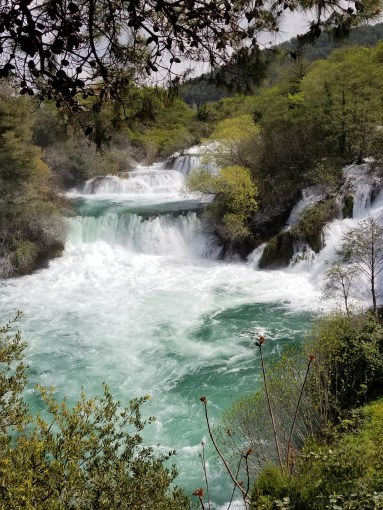 milled, cloth washed and more. Krka National Park also includes a monastery and archaeological site Burnum. There are many other falls along the way, like the one pictured on the left, but they all aren’t named because they aren’t a certain height or distance. Beautiful nonetheless! While we did not see everything there are other great things to offer for the next time we visit!
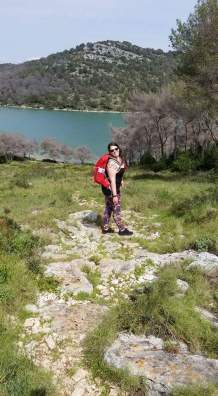 National Parks that Clinton and I visited during our European travels. First stop, Telašćica Nature Park, located on the island of Dugi Otok, Croatia.
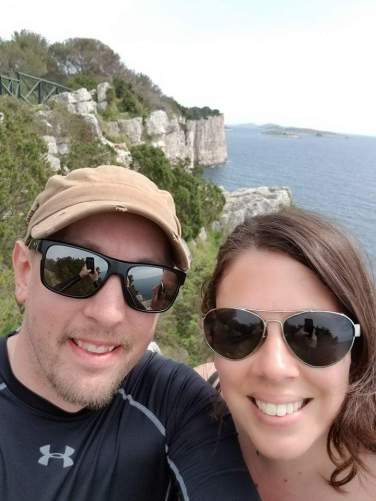 actually saw any land. I personally love to (safely of course) look over the edge of cliffs so I did get one quick view before Clinton (who does not!) told me to come back. 🙂 We spent some time walking around the forest which was filled with trees and flowers of all kinds. Because it still is early in the Spring season, everything was just beginning to bloom but it smelled beautiful. The best part is that we literally were the only people there. We rode by a Ranger patrol vehicle – they just waved – and there were a few boats docked in the lake but other than that we had the park to ourselves! What a great experience.
 Talley Your Adventure - The Blog