Talley Your Adventure – The Blog

Adventure Awaits!

At Talley Your Adventure, we don’t just plan luxury and culturally rich travel experiences—we live and breathe them. Our blog, travelingtalleys.blog, is where we share the real stories behind our adventures: kayaking alongside glaciers in Alaska, exploring temples in Japan, chasing waterfalls in Iceland, and wandering through storybook towns in Germany. If it’s unforgettable, chances are we’ve done it—or we’re planning it next. Impact-Site-Verification: 8a69d429-4a55-4b53-b8f6-72c437661af5

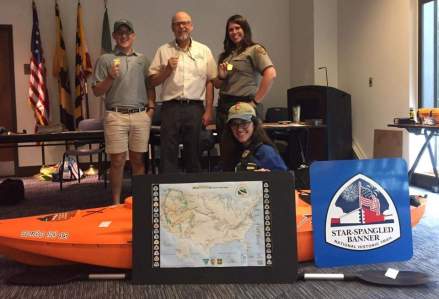
Nicolette brings deep experience in travel and heritage. With a Master’s in Public History, she’s worked as a Supervisory Park Ranger, Revenue Manager, and Program Analyst across multiple national parks for over a decade. Her career has taken her from managing interpretive boat tours in Alaska’s wild backcountry to overseeing large-scale visitor service projects with million-dollar budgets. And yes—she’s also a licensed 100-Ton Inland Master Boat Captain who’s led cultural and ecological tours from riverboats to remote beaches.

Clinton’s travel roots run just as deep. He’s worked in logistics and operations for the National Park Service and was a key member of the hospitality team aboard National Geographic Lindblad Expeditions. From managing guest services on remote international voyages to coordinating facility software systems stateside, he knows what it takes to deliver seamless, high-end travel experiences—even in the most unpredictable places.

Together, we created Talley Your Adventure to bring our experience, passion, and attention to detail to your travel planning. Whether it’s a fully curated group trip or a personalized vacation built just for you, we combine expert-level service with insider know-how—so you can focus on the magic of the journey.

Want us to help you on your next adventure? Head over to www.talleyyouradventure.com!

Sakura Blooms – Inuyama, Japan

  • Welcome back, and enjoy this last post about our trip to Europe!

    We had already planned all our flights and Airbnb/hotels for the trip, and because of this we were able to do whatever we wanted in whatever city we were in without thinking through the major travel movements. One thing I had planned was our trip to and from Zadar. Ryanair is very convenient, but like its American counter park Allegiant, it is sometimes a struggle to plan a trip based on dates. We decided it would give us the best reach of time if we flew into Zadar on a Tuesday, and left from Split on a Saturday. Split is another major city that is only about 2 hours away by bus. To help timing wise, we planned to stay in Šibenik the night before our flight out of Split to Amsterdam, which is halfway between Zadar and Split.

    Šibenik is the oldest native sea side Croatian city.  Mentioned in 1066 in the Charter of the Croatian, it was chartered in 1167. Heavily fought over between Italy and Hungary (the country changed hands many times) ended in 1412 when Venice prevailed. The city became part of Napoleons rule during the Napoleonic Wars and was eventually absorbed by the Austro-Hungarian Empire. Like Zadar, after World War I it became part of Italy. The Croatian War of Independence was fought between Croat forces who had declared independence from Yugoslavia in 1991. Today, Croatia is an independent country with a distinguished culture and academic future. There are plenty of great sights to see while visiting, such as the Roman Catholic Cathedral of St Jakov, which was designated a UNESCO World Heritage site in 2000.


    We arrived in town around 5 p.m. after visiting Krka National Park and met up with our Airbnb host. I have to say – the Airbnbs in Croatia are amazing. Not only are they well taken care of and have an excellent vacation, but the hosts are super knowledgeable and really have a passion and love for their city. It was evident in Zadar and was definitely evident in Šibenik. We were pretty tired, so we decided that we would take our hosts suggestion and head down to the waterfront and have dinner. We ate a delicious meal at Tomaseo Konoba, and with the great location were able to see the sunset as well. We walked around the town for a little bit before heading to our hotel.

    One of the main reasons I wanted to stay in this particular city is the approximate distance from Krka National Park and Split. I wasn’t sure how our plans would pan out in getting to the airport, but I knew they would be easier if we were in a closer city. Being so close to a lovely National Park I think only helps as it was a quick bus ride from the park entrance to the city, and from there a quick walk through the town. The city takes patience at is is small, not well navigable, but very picturesque. Though we were only able to stay one night, and not much time walking around during the day, I still think this city was very pretty, had gorgeous sunset and sunrise views, and had excellent food. Easy access to major transportation and a lovely National Park was a plus!

    The next day, before we headed out we were able to take a nice stroll and eat some breakfast before we caught our bus to the airport. We flew to Amsterdam, where we were able to stay one more night before getting onto our international flight home. While we had some trouble actually getting home when inclement weather in the US cancelled our flights, the fantastic time we had when we were exploring Europe heavily overshadowed any negative times we may have had during our journey.

    We hope that you had as great a time reading about our adventure as we had experiencing it! I suggest you take some of our reviews and start planning a trip of your own. There is so much to learn around the United States and Europe. I hope this blog encourages you to get our there, #FindYourPark, learn more about other cultures, and have a few adventures of your own! Until next time.

  • Hello! This post will focus on the next adventure of our Europe trip, and will introduce a new country- Croatia! Croatia is a beautiful country 20180412_162758that rests geographically along the Adriatic Sea between Central and Southeast Europe. While we were in Croatia, we were able to visit two major cities: Zadar and Šibenik. We spent most of the time in Zadar where we had nothing concrete scheduled but our Airbnb!

    You’ve already read a bit about our time in Zadar when you read the post about visiting Telašćica Nature Park during National Park Week. After having a wonderful time with our friends throughout Germany and the Netherlands, we took a short (cheap!) flight on Ryanair and took a short bus ride into the main city center, where we navigated through the bustling streets until we reached our Airbnb. Like most of our trip, we elected to not book a room directly in the city center, mainly so we could get a bit of the local feel. Traveling in the off-season helped with this, too. 20180412_191257We had already reached out to our Airbnb host, who met us at a small cafe right next door to our room. I must say – it was spectacular. Our room was like a mini hotel. Our Airbnb experience so far has always been booking a room in a shared home. The owner was always there. This time, it was apparent that the host owned a few properties and uses them exclusively as a hotel through Airbnb. He gave us a map of the city and tons of wonderful recommendations. Later, he’d help us with our adventurous trip to Telašćica Nature Park. We had arrived in the mid-morning, so we were well rested and ready to drop off our backpacks and walk around the city. First stop – the sea! Steps from our room was the beautiful Dalmatian Coast overlooking the Adriatic Sea. Breathtaking view though they were, it was only the beginning!

    Zadar is the oldest continuously inhabited Croatian city, and like most important cities that lie on a major trade route, Zadar has been ruled over by many different countries. It can trace its history back to the 9th century BC when it was founded as a settlement of 20180410_150110the Liburnians. In 59 BC, it became a Roman municipal and in 48 BC, a roman colony. Evident throughout the current city center is the Roman characteristics, including the network of roads and the public square. In the 400s, after the Roman Empire fell, Zadar became the capital of Dalmatia under the Byzantine. Between 1202 and 1797 with the fall of Venice, Zadar was conquered by the Republic of Venice and the Turks. This ensured continuous trade in the Adriatic though the important cultural and administrative center that characterized Zadar. This influence can be seen today with the obvious architecture styles, cultural themed center, and the food. Croatian writers became famous as the city, and the nation, began to fashion an identity uniquely “Croatian.” It would not be until the 19th century that Zadar would be the center of the growing cultural and national Croatian movement. After World War I, Zadar was under the control of Italy with the Treaty of Rapallo. When the Germans took over the 20180412_114257area in late World War II, many ethnic Italians left and the Allies heavy bombed the area. It was ceded back to Croatia after it was liberated in November, 1944.

    Zadar is a small city but has lots of character. There is a gorgeous waterfront area that includes a set of steps leading down to the water. These steps are actually the Sea Organ – a complex set of pipes of various length and height that play 7 chords of 5 tones, all depending on the tides. You can sit on the steps of the organ and enjoy a lovely sunset on the Adriatic while listening to the tunes of the tide. Speaking of sunsets, we enjoyed a few of them during our short stay in Croatia. Zadar was cloudy for a lot of our stay, but we were able to see a sunset in various places along the long waterfront promenade. Right next to the Sea Organ is another neat piece of art – Greeting to the Sun. This solar light illuminates at night and memorizes viewers with colors and patters through its energy span. Both of these were created by Nikola Bašić.

    Food is important when experiencing a new culture and Zadar does not disappoint! We had excellent recommendations for various restaurants around the city and were able to 20180412_124022try a few of them while walking around. There were a few nice cafes that dotted the streets, and with such impressive architecture no matter where you sat it was nice to take extra time and have a coffee, hot chocolate, or a beer and just look around. Seafood, naturally, is highly recommended. While there I had shrimp, sea bass, swordfish, tuna, and white fish. It. Was. Delicious! One of the best places to go was Bruschetta Restaurant and Proto. We had great service, excellent food, and they are both in different locations around the city so you can easily experience different levels of people watching.

    Zadar is a gem of Croatia, with its rich history and scrumptious food choices, the many recreational activities that are available, and its fantastic cultural references seen through the city. We were happy to go to a city off the beaten path. The proximity to other great cities is also great, as from here we left to visit Krka National Park before heading to Šibenik for one night. See you back here for more about Croatia!


    This slideshow requires JavaScript.


  • Hello all! This blog post will continue with the #TravelingTalleys in Europe and showcases the wonderful, smaller cities that were visited. I won’t put any time reference in because we visited them very sporadically and it depended on when we were in the Netherlands or Germany with our friends. Enjoy!


    Nijmegen is a city  in the Netherlands near the German border on the Waal river. It is the oldest city in the Netherlands, celebrating 2,000 years of existence in 2005! We spent the majority of the time sitting and drinking warm beverages inside a cafe because it was very windy and cold outside. We sat in a cafe near the Stevenskerk. This church was consecrated by Albert Magnus, the Bishop of Cologne, in 1273. Extensive construction took place in the 15th century and stopped in 1650, though it was still incomplete. Damage was sustained when Nijmegen was bombed during World War II but was fully renovated after the war, and opened in 1969. Nijmegen is truly a beautiful area to visit!


    Xanten is in the state of North Rhine-WestphaliaGermany. It is located in the district of Wesel. While there we walked around the town, got ice-cream, and saw the sights! We even had lunch with more friends and their growing family! 🙂 The Kriemhildmühle is a historic windmill and only mill in the Lower Rhine. The mill was actually built as part of the city’s fortification at the end of the 14th century. In 1804 a merchant named Gerhard Schleß purchased the tower and converted it into an oil mill with a 19.3 m (63.3 ft) high windmill. After it was sold to a miller, it became a flour mill. It is open daily for visitors to walk through, see the city at a great view, and take in some cool history! We also visited the Xanten Cathedral. Construction of the cathedral lasted 281 years, starting in 1263 and finishing in 1544. Both of these places were really cool to see!


    A quick lunch spot in the Netherlands showed us a beautiful beach and great views even though the weather wasn’t at its best. Strandclub Witsand, the restaurant we ate at during our quick visit, was delicious! We didn’t sit outside but we did have a pretty good view of the beach where the restaurant was  facing. Located in Noordwijk, a smaller coastal town that reminded me immediately of Cocoa Beach, a local beach near where I grew up. This was also the first place that we tried bitterballen. Specifically located in Noordwijk aan Zee, the area was originally founded in 1200 as a fishing village, and remained the areas primary business until recent history. Today, it is a popular resort town. And I can definitely understand why! It’s a gorgeous area, even when cloudy. 🙂


    Kleve is a small town in the Lower Rhine region of Germany near the border to the Netherlands and the Rhine river. Besides quaint, brick walkways and cute shops along streets you can stroll on all day, the area also holds a castle called Swan Castle! Schwanenberg (Swan Castle) resides on a steep hill and has a massive, 55m (180 ft) tower. You can walk into the center of the square at the top of the hill and see the castle in person. The surrounding area grew mainly starting in 1242 when Kleve received city rights. Like many of the smaller towns close to the border of two major countries, there are obvious influences from both the German and the Dutch culture throughout the city. Though it still is obviously German it is really cool going between two different countries and seeing the differences and similarities!


    One of our favorite places we visited near where our friends live was ‘s-Heerenberg, located in the Netherlands close to the German border. (Noticing a theme on the locations?) One of the stories we learned about the city involved a witch trial in the early 1600s for a condemned woman, Mechteld ten Ham.  After she failed her trail, she was found guilty of sorcery and burned alive at the stake. She was held as prisoner nearby the Castle Huis Bergh until her death. We were able to view the area where she was held prisoner, and her house –  which today has an informational plaque and statue about the accusation she was a witch and the remainder of her life. The Castle Huis Bergh was a very interesting place to tour. We were able to view the grounds and the inside living quarters, and joined a tour to take us to the top for a grand view of the area. The castle history dates back to the 13th century and was previously owned by the counts den Bergh. By the early 1900s, the castle has undergone damage during the Dutch Revolt and even burned down in 1735. In 1912, the property and all belongings were sold to Jan Herman van Heek, who restored the buildings. We had a great time having a drink and enjoying the view in the same area, and walk around the park with our friends!

    Our German and Dutch adventure comes to a close. We were very happy to spend the time with friends whom we only see on average every four years. This time, it was our turn. We were coming back after 8 years! But we knew we wanted to take time to try a new adventure and travel to a different country. After a few conversations, it was decided that Croatia was our next trip. We had tried to go to Croatia when we visited last time, but the train was over 15 hours just to travel a short distance. It wasn’t worth it. This time, we flew Ryanair (totally recommend!) and saved time and money flying from the nearby airport in Germany to Zadar, Croatia. We had Airbnbs ready, information on how to use the train and where to walk to get there, and a fair currency exchange. Next blog post will be about our time in Zadar!