


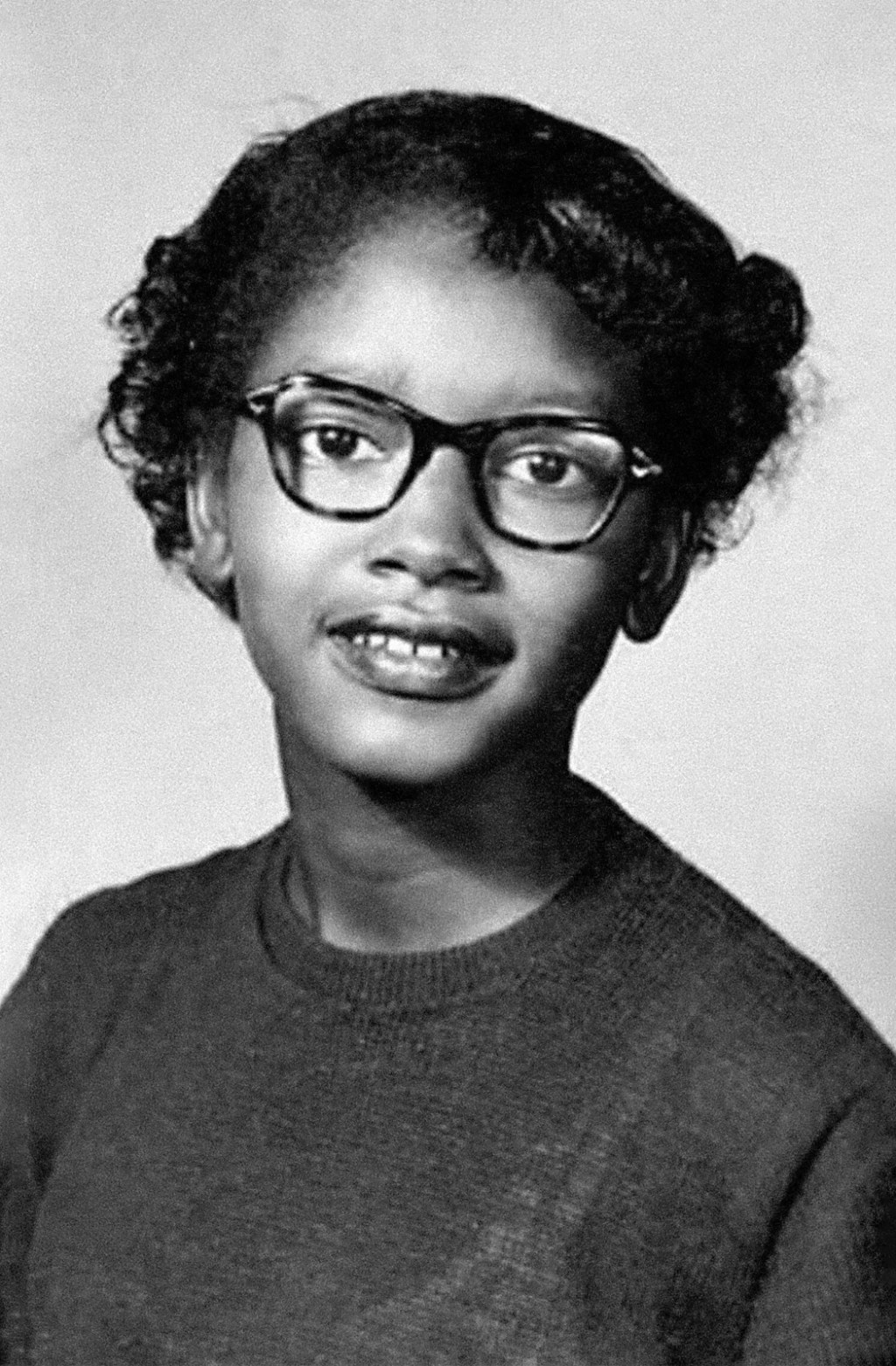
Unmarried and pregnant did not stop Claudette Colvin from refusing to move from her seat on a segregated bus on March 2, 1955. She was only 15 and was arrested immediately after the ‘incident’ – which happened to take place nine months before Rosa Parks similarly remained seated on a similar Montgomery, Alabama bus – sparking the bus boycotts. Though Claudette was not part of the early Civil Rights movement story because of her situation as an unwed, young mother (and all the stresses that brings without having to shoulder the beginnings of a movement!), Claudette did eventually enter the conversation by the late 1970s.
On February 1, 1956, Claudette was one of four plaintiffs for Browder v. Gayle, challenging the bus segregation in the city of Montgomery, Alabama. On June 13, the Civil Rights Movement scored a massive victory when the judged determined that bus segregation in Alabama was unconstitutional. The case eventually made its way to the US Supreme Court, where the initial ruling was upheld and the state of Alabama was required to end bus segregation. On December 20, Dr. King officially called off the bus boycott, claiming a major victory with the state declaring all buses to begin integration.
Claudette’s story is an important part of the Civil Right Movement because it calls into question many decisions – as understandable as they were for the time period – on why Claudette was not seen as desirable as Rosa Parks while also making sure to highlight as much of her own accomplishments as possible. Claudette did refuse to move when a white woman demanded her seat. We can all emphasize with a young 15-year-old girl who just wants to sit down, get off her feet, for a simple ride down the street. Why does she have to move? Why can’t this woman – this stranger – find another seat? The answer is discrimination and segregation. Refusing to move, getting arrested, and then testifying in defense of integration were all important steps in the Civil Right Movement – that is why Rosa Parks would do similar nine months later.
Claudette Colvin has received many awards over the course of her life, but one we should reflect on is the simple act of standing up for her own rights. She, just as much as any other young girl regardless of skin color, can sit wherever they want on a bus.
The Montgomery Bus Boycott was in effect from December 5, 1955 to December 20, 1956 and is only one small part of the entire Civil Rights Movement as a whole. Beginning the Monday after Rosa Parks was arrested until Dr. King announced the end of the boycott because the Supreme Court has deemed buses to begin integration – the success of the boycott was instrumental in later actions Dr. King would take in defense of Civil Rights. The Civil Rights Movement was from 1954 – 1968, and arguable is still ongoing today.
“People always say that I didn’t give up my seat because I was tired, but that isn’t true. I was not tired physically, or no more tired than I usually was at the end of a working day. I was not old, although some people have an image of me as being old then. I was forty-two. No, the only tired I was, was tired of giving in.” – Rosa Parks
 Talley Your Adventure - The Blog
Leave a comment